Trap

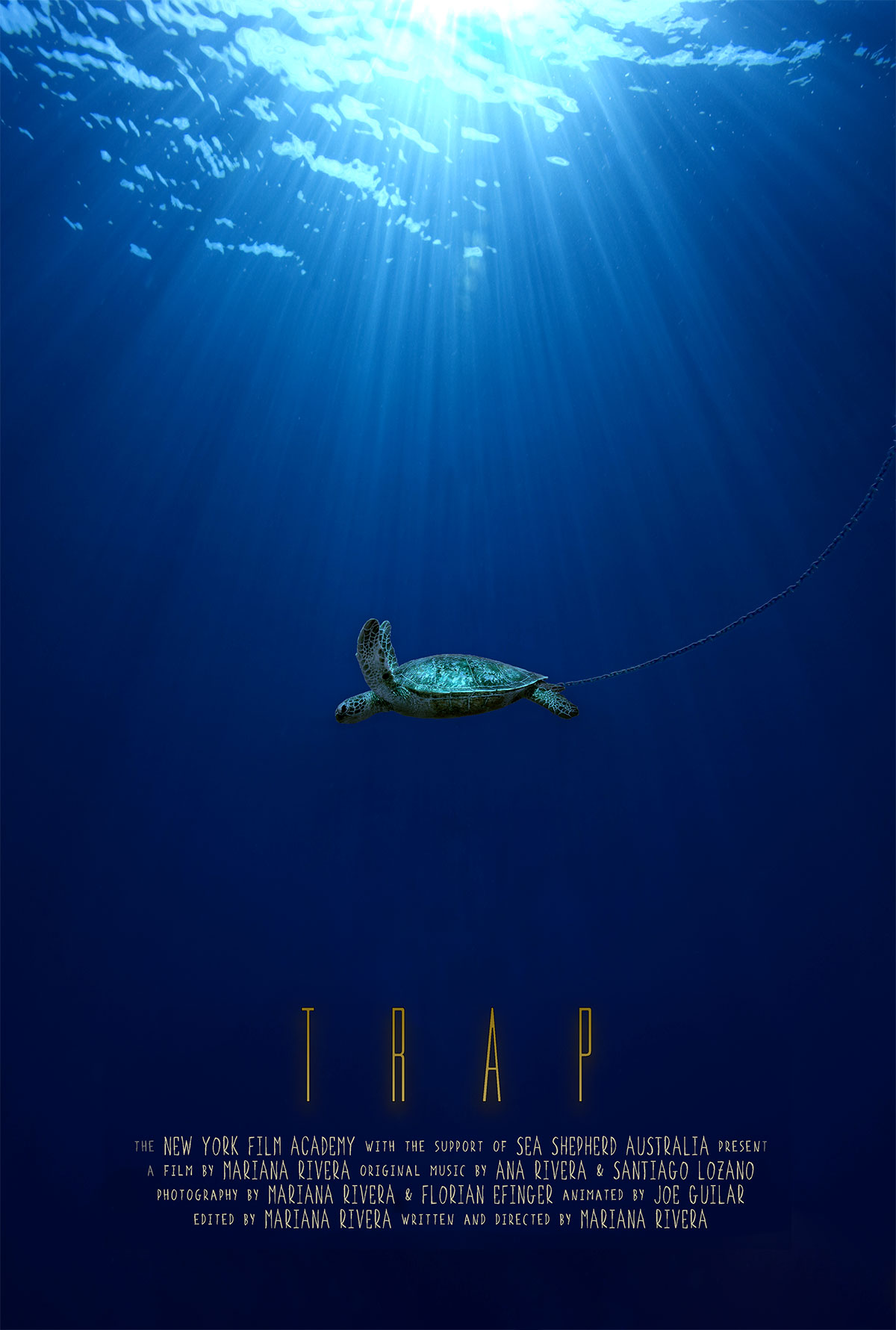
Trap

Trap is a short film impact documentary about the devastating effects of the Shark Control Program in Queensland, Australia. The program, financed and defended by the Queensland Fisheries Department, which was allegedly meant to protect swimmers from shark attacks in Australia, had a far more devastating effect on marine life than did actually protect from any sort of attack. In alliance with Sea Shepherd Australia, the film was used to expose the truth about this program and served as a tool in schools and public events to inspire people to stand up for the removal of these nets.

Directed by Mariana Rivera
Cinematography by Mariana Rivera

Reef People

Reef People

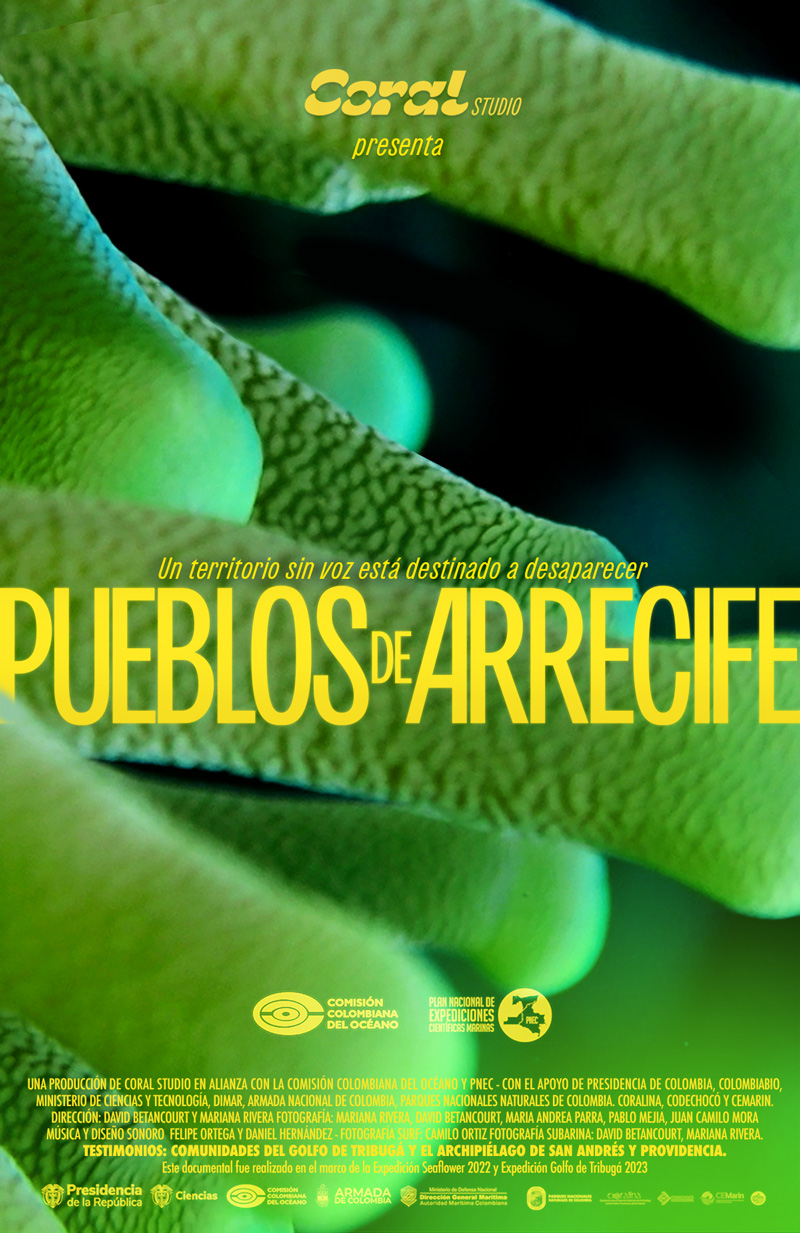
Pueblos de Arrecife (Reef People) is a captivating documentary short film that illustrates a parallel between two unique places in Colombia: the Archipelago of San Andres, Providencia, and Santa Catalina in the Caribbean, and the Gulf of Tribuga in the Pacific coast of the country. As part of the National Plan for Marine Scientific Expeditions of the Colombian Ocean Commission, this documentary takes us through journeys among corals, stories of cultural heritage, and extensive landscapes that reveal an essential theme: the importance of listening to local communities in decision-making for the marine and coastal territory of the country. Through omnipresent voices, the film sheds light on the deep relationship between humans and the sea, the challenges these communities face, and the crucial role they play in preserving their environment and traditions, as well as their responsibility for collective protection.

The documentary serves as a powerful reminder of the vital role that science and the knowledge of local communities play in the protection of natural and cultural heritage.

Directed by: Mariana Rivera Uribe and David Betancourt
Cinematography by: Mariana Rivera, David Betancourt
Production: Coral Studio and Comisión Colombiana del Océano

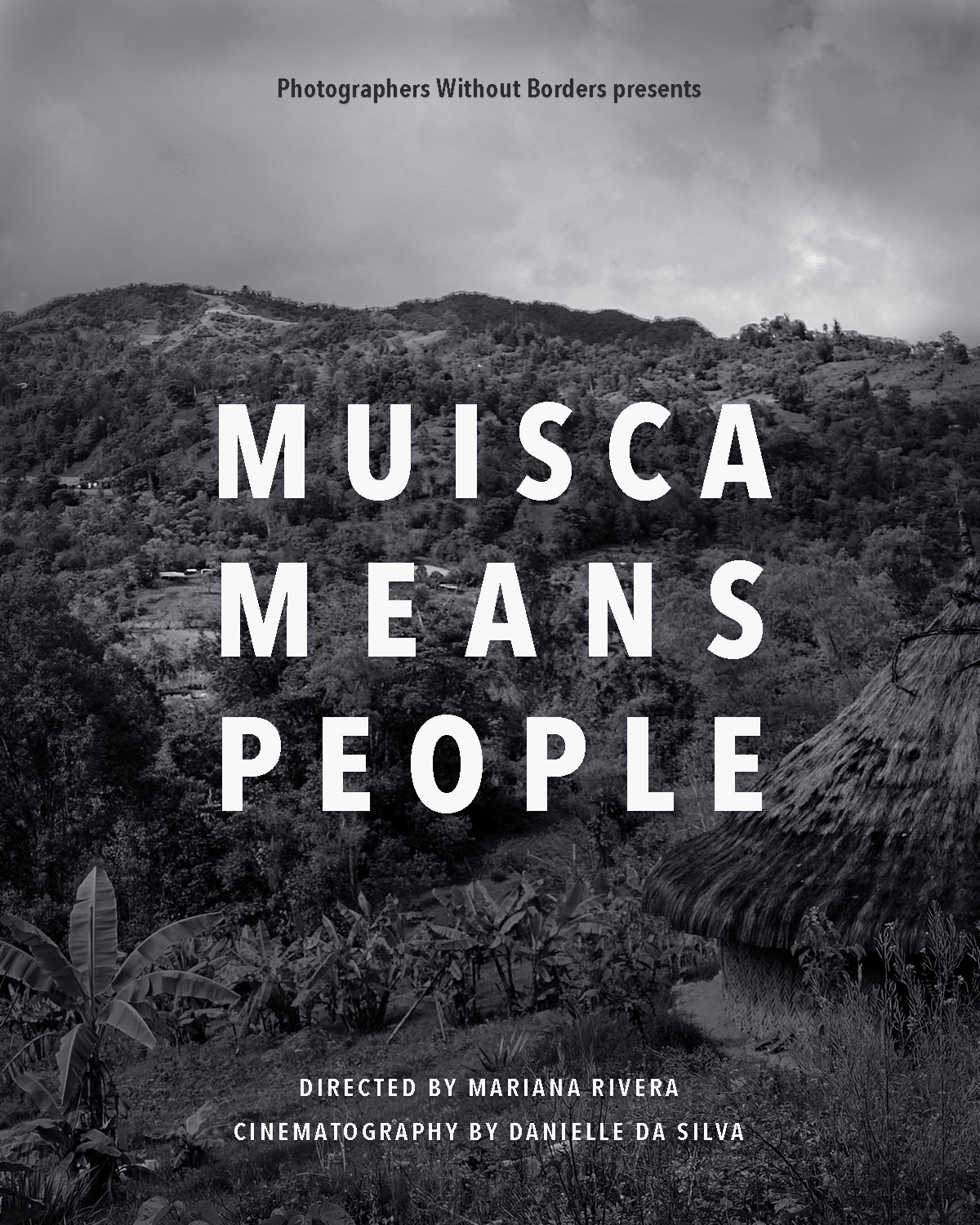
Muisca Means People

Muisca Means People

This project shares the efforts of the Muysca Fowe community in the Andes of Colombia, in leading a movement to liberate the territories they once inhabited from colonial exploitation and returning to their ancestral ways of living.

The Muysca (meaning “people” in the Muyscubun language), an ancient Indigenous civilization native to Colombia, see this decolonization of both the mind and the land as only possible through alternative education systems and a permanent dialogue with the surrounding nature. For them, everything is Muysca, everything is people, and rebuilding our relationship with the people-land, the people-river, the people-trees and all beings who share the planet with us is the first step to relearn what has been lost throughout centuries of separation from our true self.

The process of the Muysca Fowe community (fowe meaning “fox”) is not only about liberating the land, but also about liberating ourselves, our minds, our conditioning and our habits which seem natural to us now from our colonial heritage and indoctrination which is still present in our daily lives.

This means that first we must liberate and decolonize our minds and bodies in order to then act to liberate the land. Through colonization, we were made to believe that we are not sons and daughters of Mother Earth, that we do not depend on her and vice versa, and we have forgotten to listen to her. The Muysca believe that colonization was possible through the disconnection to the Earth, through what they describe as the “cutting of the umbilical cord” which kept us connected to Mother Earth. Therefore, now we are lost and confused since we have lost our sense of origin and connection.

Directed by Mariana Rivera
Cinematography by Danielle Khan Da Silva

OTHER Projects

Water well campaign – Kenya, Africa

Previous
Next

Water well campaign – Kenya, Africa

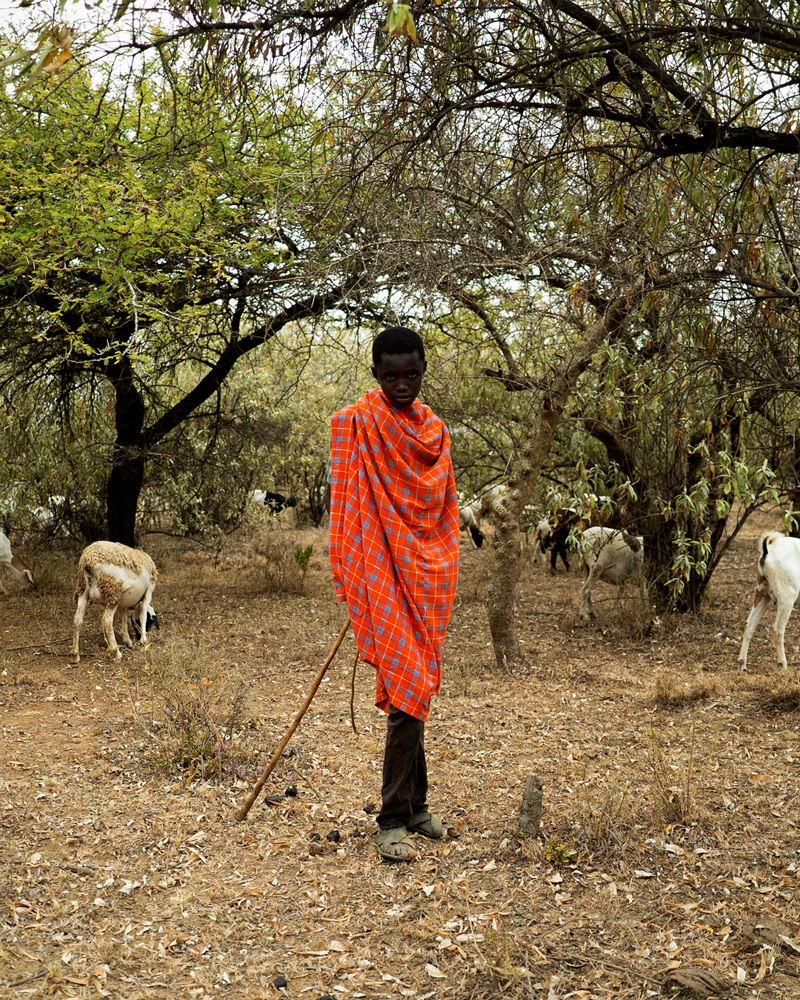
Samson was born in “the year of the heavy rains”, around 60 years ago, in the Maasai community of Naroosura in the south west of Kenya, where time was not defined by numbers but by natural events. Today the weather is so unpredictable that relying on natural events as reference has become unreliable.

The Maasai are one of the last tribes in Kenya to still preserve many of their traditions and their relationship with the land they inhabit and the wildlife that has roamed this territory peacefully for centuries.

In between the houses made of clay, and animal footprints, it is common to see along the arid landscape, silhouettes of zebras, antelopes and giraffes wandering.

Unfortunately, every year the droughts have become longer, water is more scarce and as a result, the conflicts between people and wildlife have become more frequent. This is forcing people to have to walk for long hours in search of water, and for hundreds of thirsty animals, which do not die of thirst on the way, to run over and destroy the little crops which the Maasai depend on, and once in a while claiming the life of a young child on his/her way to school, along what is the same corridor of a thirsty elephant.

Samson has been working for years to find ways to restore the harmony between the community and the wildlife. He has managed to raise funds for building sheds to employ and train park rangers to monitor and prevent wildlife attacks. As he puts it, “this is where his heart is” and is not anywhere near giving up. But as is the case for all of us, he cannot do it all alone.

So… what can we do?

The solution is not simple nor cheap. According to Samson, the long term solution is to drill into the soil and access the underground water, but this requires specialized technology, a skilled team and a large investment which the community does not have, and which the government seems to have little interest in. But there is another option: superficial dams can store water for up to 4 months during the dry season, serving as reservoirs for basic needs of the communities, crop irrigation and for wildlife to access and drink along their migrations. This will reduce the pressure on people having to search for water to the river and can keep the animals far from the villages and the schools.

All of these photos were given to me by Africa.

They were given to me by the land of the Maasai, and as every important gift, it comes with a responsibility.

Each photo that is sold means being one step closer to the construction of three water dams, which for many, represents the difference between life and death.

Each photo is a step closer to preventing this land and all that it holds, from vanishing.

Little critters: The greatness of being small

Previous
Next

Little critters: The greatness of being small

What does it mean to be small?
To be small means every day is a new challenge.
To be small means the every mount is a Mount Everest.
To be small means every drizzle is a storm, every breeze a hurricane and every wave a tsunami.
To be small means to find a home in places where no one ese can reach.
To be small means a single day could equal a life time.
To be small means to be invisible to the crowd.
To be small means carrying a fragment of a leaf to the other side of the road is enough for the day.
To be small means to be forced to find creative ways to stand out.
To be small means having to rely on others to make it through.
To be small means to recognize your own fragility and make peace with the unknown.
Being small means to look up at the world and understand the greatness of being small.

Decolonize the land to decolonize the mind

Previous
Next

Decolonize the land to decolonize the mind

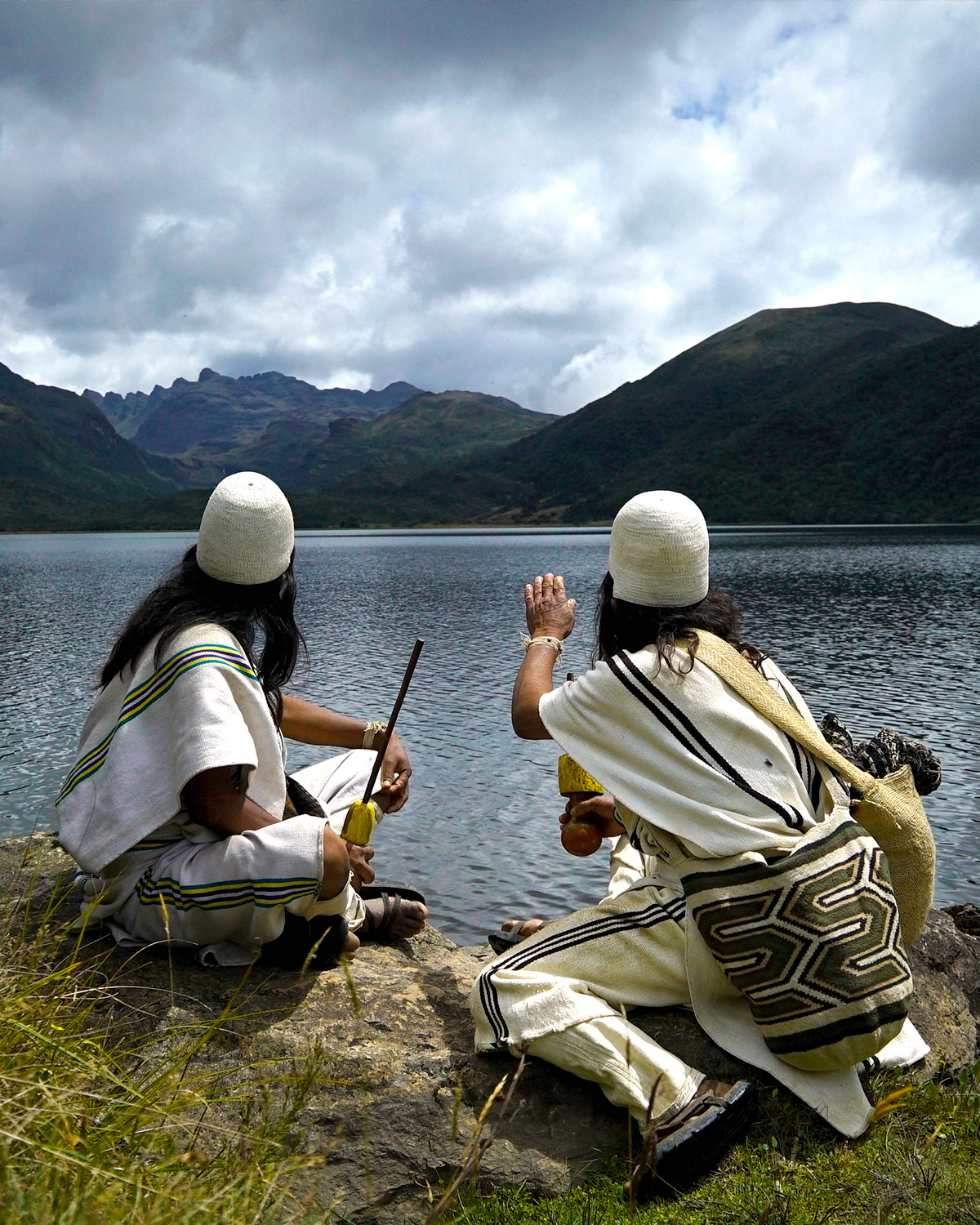
“We Muisca are people, new people, seed people, gold that blossoms from the womb of Mother Earth.” Fowe Muisca Community

The Muysca (or “muisca” in Spanish) are a native indigenous community from what today is known as Colombia. Like most indigenous groups around the world, the Muisca have been displaced from their lands and forced to give up their customs, language and beliefs in order to survive an extensive process of colonization. Today, a new community of Muysca, called the Fowe Muisca de Oriente has decided to free themselves from what they call “mental colonization”, a concept furthermore disruptive and destructive than the colonization of land, although intrinsically interconnected. This mental colonization is present not only in indigenous communities, but in most modern societies worldwide, where through the disconnection of nature and our territories, there has been a disconnection of ourselves and our place in the world. Thus, anger, hate and violence are understood as a resulting disease, or disharmony, experienced and extended throughout western colonized minds.

This process of returning to the roots, questioning what it means to be “native” to a territory, has given rise to Aka Muysca, Zuhuskansuka Aba, which means “to start over again”, meaning the one who returns home (to the seed, to the origin) and working alongside other indigenous communities such as the Wiwa, Kogi and Arhuaco from the Sierra Nevada de Santa Marta to join their efforts in liberating the land from privatization and extractivism, which has led these ancestral and sacred lands to become dry, eroded and dead. Together, for over 10 years, the Wiwa and Muisca communities are working together to redefine what it means to be native, beyond frontiers and modern concepts which strive to segregate humanity. With the higher purpose of committing towards a global conscience – according to the Muisca – this decolonization of the mind is only possible through an alternative education model and a permanent dialogue with nature and the surrounding territory, and through the understanding that everything is muysca, everything is people, and that our relationship with “earth people”, “rive people”, tree people” and all living beings who we share the planet with is the first step to re-learn the teachings which have been lost during centuries of separation from our true selves.

Therefore, the process of freeing the mind is inseparable from that of freeing the land from the oppression and exploitation it has been suffering for years, to produce that which it is not meant to produce, at rhythms and times which are unnatural, and to respond to a colonialist model of infinite growth and overproduction which is leading to a global collapse.

All these practices make up what is the process of decolonizing the mind, where the result is what the Muisca have called the “New Humanity”: a humanity which respects and honors life, the water and the earth, and which safeguard the spirit and the memory of the ancestors as guides to maintain the legacy of Mother Earth and this way live in harmony with all living beings.

This project seeks to liberate land in the Sierra Nevada de Santa Marta, in the north of Colombia to reclaim and reforest 20 hectares near the Wiwa village of Rongoy and build an ancestral pedagogy/education center where native communities and people from all around the world can come together and learn about the culture, traditions, cosmologies, ancestral permaculture, reforestation, and ultimately about the caring and connection with Mother Earth.


This revolutionary idea of indigenous communities coming together as one is the result of a collective effort which aims to protect the land and waters of the Earth as one, independently of the history, lineage and individual beliefs of each community.

These photographs are the result of the Revolutionary Storyteller Grant
awarded by Photographers Without Borders, 2022.

Photos and text by Mariana Rivera
Winner of the Revolutionary Storyteller Grant, 2022

An immense thank you to the Muisca and Wiwa community and all the people
who supported this Project and who make an effort to plant
the seeds for a New Humanity.

For more info, visit
https://www.photographerswithoutborders.org/online-magazine/2022/5/30/muisca-means-people

Hello world!

Welcome to WordPress. This is your first post. Edit or delete it, then start writing!